

Where the Cash Hides: Spring Cleaning Edition
By: Silverman Consulting Staff
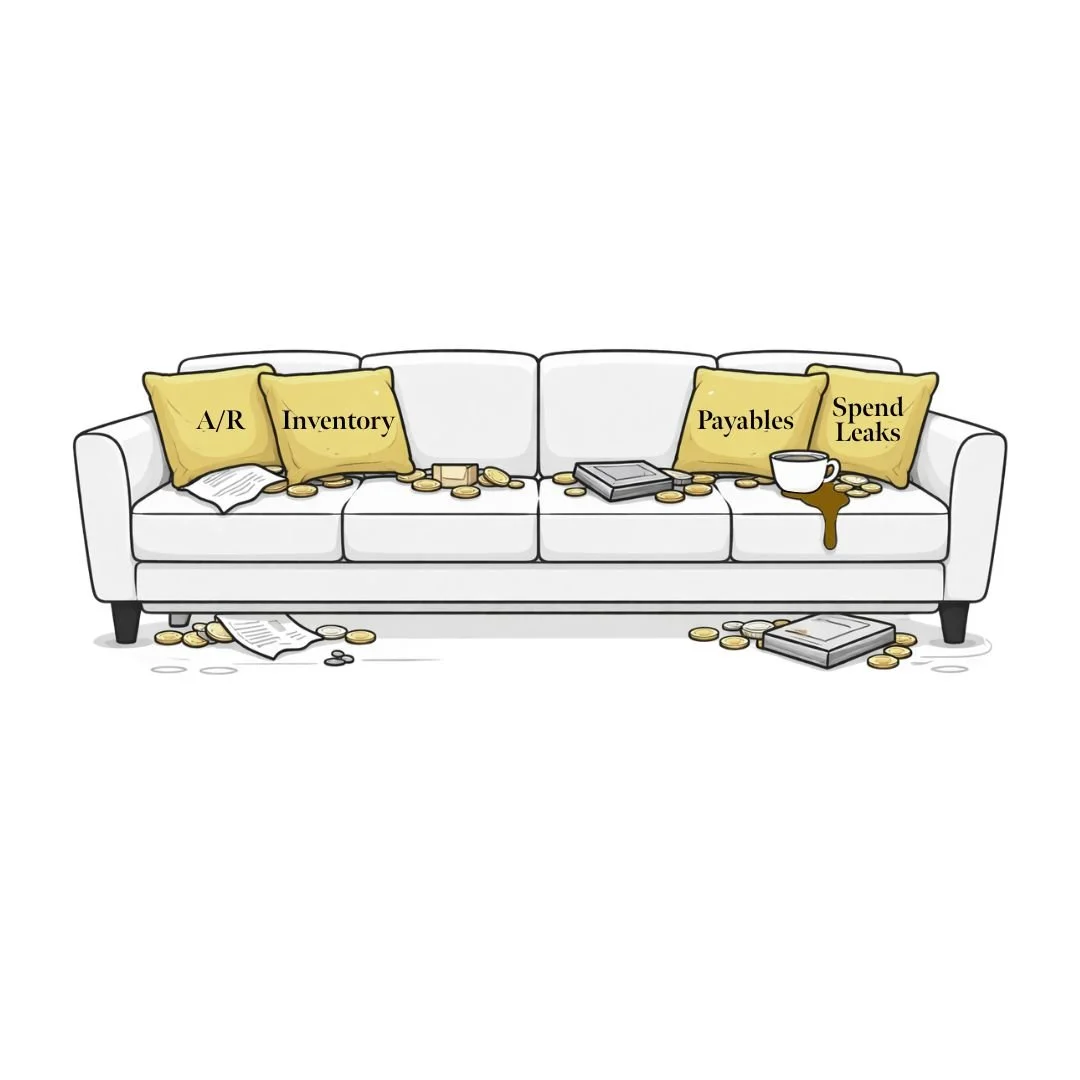
Spring has a way of making people do irrational things, like deciding today is the day to reorganize the garage, label the bins, and finally look under the couch cushions for all the loose coins that vanished last fall.
Businesses have couch cushions too.
The “loose change” isn’t literal. It’s cash that’s quietly trapped in everyday habits: invoices that drift past due, inventory that keeps growing because “we might need it,” payment routines that evolved without intention, and spending that became automatic when times were busy.
The best time to look under the couch cushions is when you don’t have to.
The point of this article isn’t distress. It’s discipline.
At Silverman Consulting, our work in turnaround and restructuring environments has taught us that cash improvement rarely comes from one heroic move. It comes from a consistent set of practical behaviors, executed with visibility and accountability. The same playbook that stabilizes a stressed business can also make a healthy business more flexible as the seasons change.
Here are the places we look first.
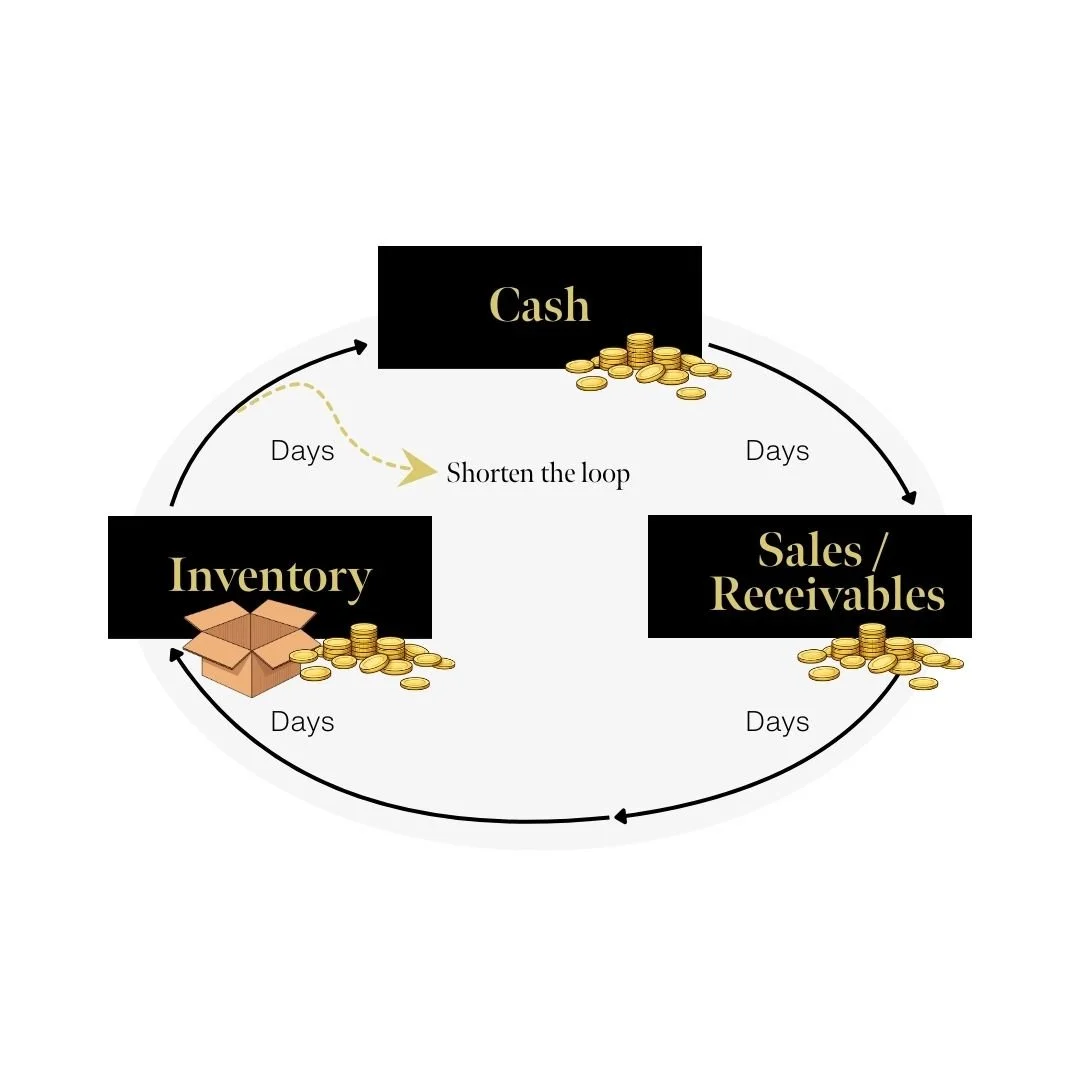
A simple idea: most “found cash” lives in the cash conversion cycle
If you want a clean mental model, think about how long cash stays “in motion” before it comes back home.
In plain English:
cash goes out to buy materials or goods (and to pay labor),
it sits as inventory for a while,
then it sits in receivables after you ship,
and eventually it returns as collected cash.
The shorter the cycle, the less cash you need to operate. The longer it gets, the more cash quietly disappears into working capital.
Spring cleaning is essentially asking:
Where in that cycle are we hoarding cash without realizing it?
1) Look under the closest cushion: cash you already earned (receivables)
The easiest money to find is money you’ve already earned.
Most companies don’t have a collections “capability” problem. They have a collections “ownership” problem. Past-due invoices become everyone’s problem, which means they are no one’s priority. Disputes linger. Short-pays age. Invoices fall into the uncanny valley of “we’ll deal with it when we have time.”
A good spring-cleaning move is to treat collections like a short campaign, not a background task. Assign a clear owner, create a simple weekly rhythm, and separate invoices into three categories: easy wins, fixable issues, and true risk accounts. Even that clarity tends to accelerate cash.
One quiet but powerful tweak: shortening the time between work performed/shipment and invoicing. A few days of billing delays, repeated weekly, can create real cash pressure over time.
2) Clean out the junk drawer: inventory that’s quietly hoarding cash
Inventory often feels safe because it’s tangible. It looks like preparedness. In reality, excess inventory is one of the most common places cash gets trapped, especially in manufacturing and distribution.
If sales flatten and inventory rises, you haven’t built a buffer. You’ve built a cash sink.
Spring cleaning here doesn’t mean starving the business. It means getting intentional:
tighten reorder points,
stop buying ahead,
identify slow-moving and obsolete items early,
and create a plan to turn the excess into cash (through targeted discounting, bundling, alternate channels, or returns where possible).
The goal isn’t to be perfect. It’s to stop treating inventory growth as a neutral event. Inventory is a decision, and it has a cash cost.
3) Change the rhythm, not the relationships: payables and payment timing
A surprising amount of liquidity improvement comes from one simple shift: Replacing ad-hoc payments with a regular payment schedule.
Many businesses, and a lot of our clients, pay bills reactively. I’m sure you’ve heard it before: the squeaky wheel gets the grease. Someone yells, a vendor escalates, a shipment gets held, and the check goes out. That approach feels responsive, but it quietly destroys control.
Moving to a weekly pay run, prioritizing critical vendors, and being consistent about timing often improves liquidity visibility immediately. It also creates a healthier dynamic with vendors: fewer surprises, fewer “emergency” payments, and clearer expectations.
4) Fix the small leaks that add up: spend hygiene and operational discipline
Spring cleaning works because it attacks the small stuff that becomes invisible.
This can mean discretionary spending that hasn’t been revisited: subscriptions, travel, perks, rush freight, packaging creep, service contracts, and overtime patterns that reflect old demand realities.
This isn’t the dramatic “slash-and-burn” version of cost-cutting. It’s the quiet grown-up version of reduce waste, protect cash, preserve optionality.
5) Ask your partners for a little help (without making it weird)
Some of the best liquidity improvements come from small adjustments with counterparties you already work with, customers, and suppliers, without turning it into a crisis conversation.
Sometimes it’s as simple as deposits on custom work, milestone billing, early-pay incentives, shipment-based payments, short-term extensions, or consignment/vendor-managed inventory in the right areas.
None of this is exotic. It’s standard business.
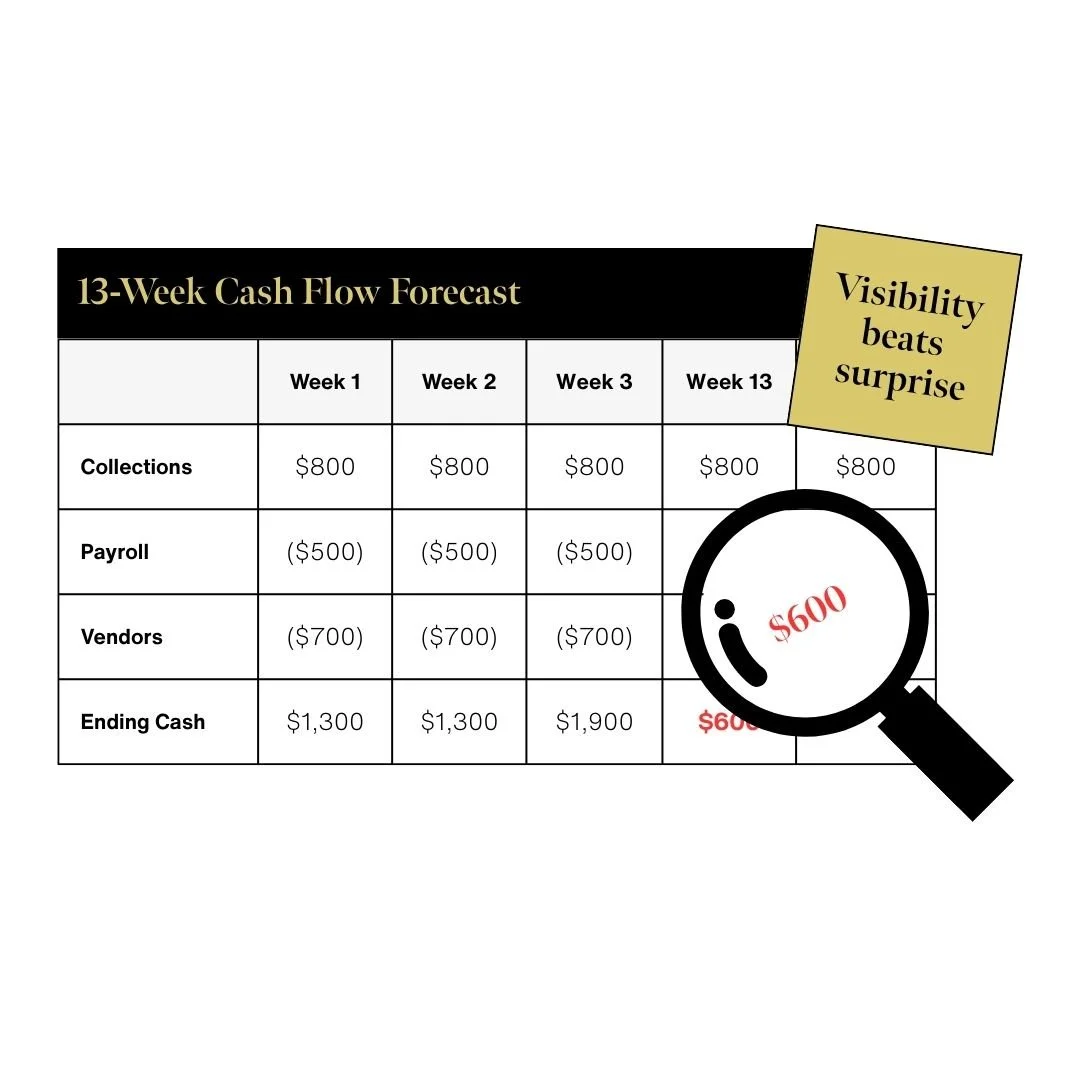
6) The bigger cushions: lender flexibility and proactive cash visibility
If you have a relationship with your lender, the best time to request flexibility is before any surprises occur. This means having clear cash visibility.
This is why the 13-week cash flow forecast is commonly used in turnarounds and remains useful even outside distress. It forces weekly discipline, clarifies timing, and establishes a shared language for the business's near-term needs.
Even a simplified version tends to improve decision-making.
7) The “garage sale”: monetize what you don’t need
Sometimes, spring cleaning means having a garage sale to sell items you no longer need.
Idle equipment, unused space, obsolete inventory, or small non-core product lines can often be converted into cash. These moves can be meaningful, but they’re also often irreversible, so the goal is to do them thoughtfully, not impulsively.
When Spring Cleaning is Not Enough and If You Need a Little More (Proceed with Caution)
For many companies, the steps above meaningfully improve cash balances. But sometimes the couch cushions aren’t enough, especially when the business is experiencing slower growth, cost inflation, or maintaining a capital structure built for better times.
If additional liquidity is required, the next tier of options tends to fall into three categories:

Owner-supported liquidity
Temporary compensation deferrals, equity injections, or subordinated loans can stabilize the business and signal alignment, though they also increase personal risk and should be approached intentionally.

Lender-driven flexibility
Overadvances, changes in the borrowing base, temporary covenant relief, interest/principal deferrals, or refinancing can provide runway. These options often trade flexibility for oversight, so they work best when visibility is strong and communication is proactive.

Asset monetization
Selling idle equipment, subleasing space, or exiting a non-core product line can quickly generate cash. The trade-off is permanence: once sold, the asset doesn’t come back.
How Silverman Consulting Helps
When Silverman Consulting supports cash-improvement initiatives, our role is to bring structure, visibility, and accountability, without disrupting the operating team.
In practice, that often includes:
Implementing and maintaining a 13-week cash flow forecast with weekly variance accountability
Leading working capital diagnostics (A/R, inventory, payables) tied to actionable decisions
Helping management prioritize actions that preserve relationships while improving liquidity
Coordinating lender communication with credible data and a clear operating plan
Supporting operational cleanup and product/customer profitability decisions when needed
Our goal is not just to “find cash.” It is to help teams build the habits that keep cash visible, so they retain flexibility long after the spring cleaning initiative ends. A seasonal cash reset keeps your business flexible, your counterparties calm, and your decisions strategic rather than reactive. And in most cases, it finds more “loose coins” than anyone expects.
The key is sequencing. Use the low-disruption levers first. If bigger levers are needed, choose them deliberately, not in a rush.
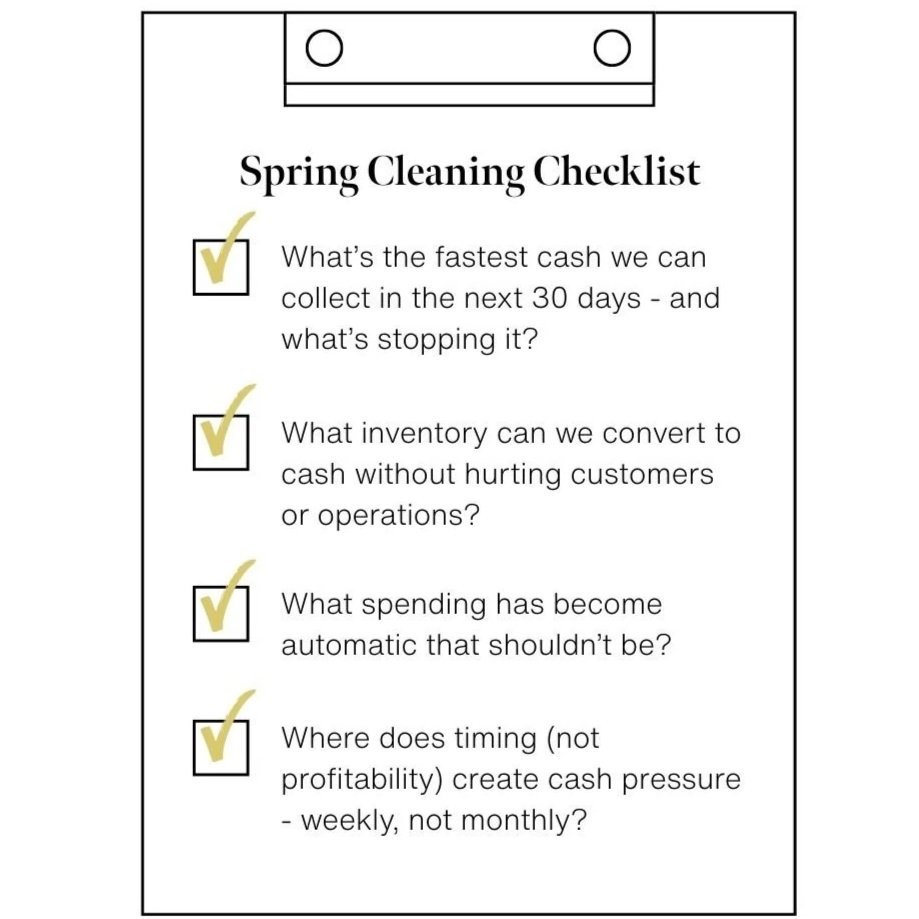
Spring Cleaning Checklist: four questions that usually find “loose coins.”
If you want this to be practical, run this quick exercise with your team:
What’s the fastest cash we can collect in the next 30 days, and what’s stopping it?
What inventory can we convert to cash without hurting customers or operations?
What spending has become automatic that shouldn’t be?
Where does timing (not profitability) create cash pressure, weekly, not monthly?
Answer those four honestly, and you’ll almost always find cash or at least find the habits that are hiding it.
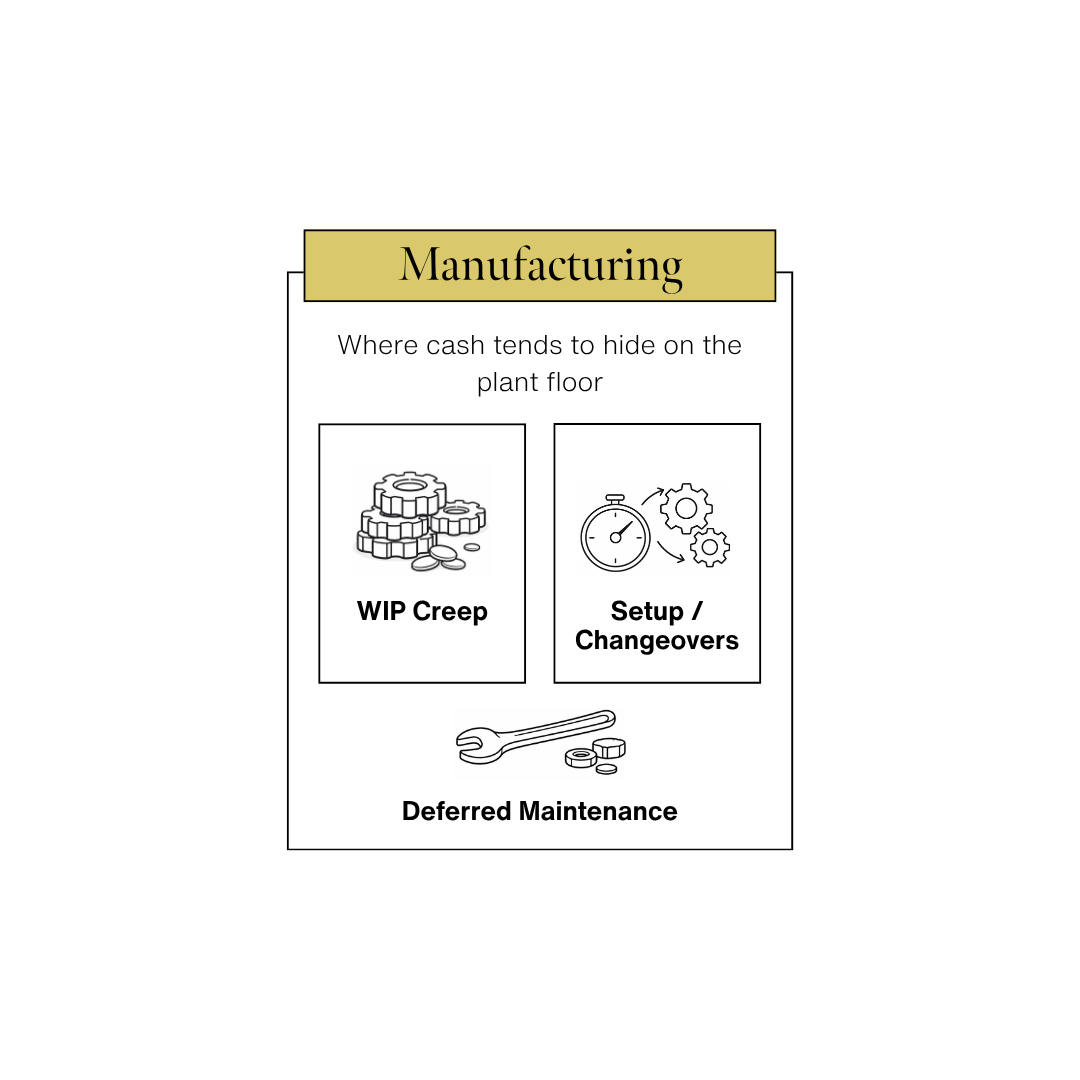
Spring Cleaning for Manufacturers
Where cash tends to hide on the plant floor
Manufacturing has a few unique couch cushions:
Work-in-process creep. WIP can quietly expand without anyone calling it “inventory.” If WIP grows faster than shipments, cash is being trapped mid-stream.
Setup and changeover costs. Low-volume complexity creates hidden labor and downtime that doesn’t show up in a simple gross margin view. The cash cost often arises from overtime, expedited freight, or scrap.
Under-absorption illusion. When volume falls, some accounting results can look “fine” while cash worsens. Spring cleaning here often means looking at contribution and cash, not just fully burdened gross margin.
Maintenance deferral trade-offs. Deferring maintenance can preserve cash in the short term, but it increases the risk of a single event that becomes far more expensive. Spring cleaning is about trimming waste, not creating fragile operations.
If you manufacture, a good seasonal habit is a quick “inventory walk” that asks: What is this, why do we have it, and how quickly can it turn into cash?
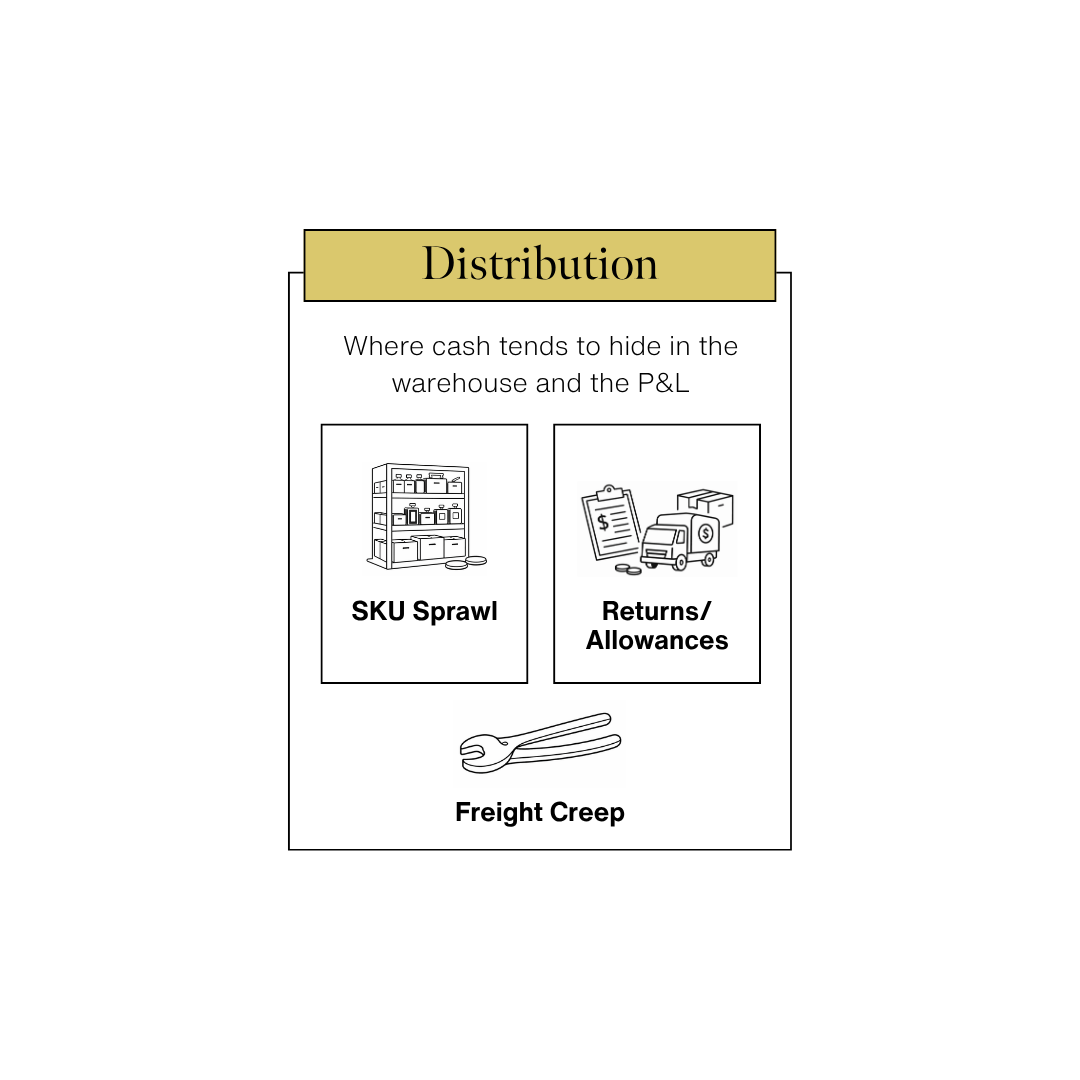
Spring Cleaning for Distributors
Where cash tends to hide in the warehouse and the P&L
Distribution has its own classic hiding spots:
SKU sprawl. Too many SKUs often means too much inventory, too much pick/pack complexity, and too many “special” situations that drive cost.
Returns and allowances. Returns, credits, and short-pays are often the quiet destroyers of cash. They can sit unresolved and distort true customer profitability.
Freight and handling leakage. Unbilled fre,ight, “free shipping creep,” and frequent expedites often become normalized. Small fixes here can materially improve cash.
Terms as pricing. Extended customer terms are effectively a discount. Seasonal “cleaning” means revisiting terms discipline and whether the economics still make sense.
If you distribute, a great spring-cleaning exercise is to rank customers not just by revenue, but by cash behavior: payment speed, disputes, returns, and cost-to-serve.